
Image Credit: Pexels
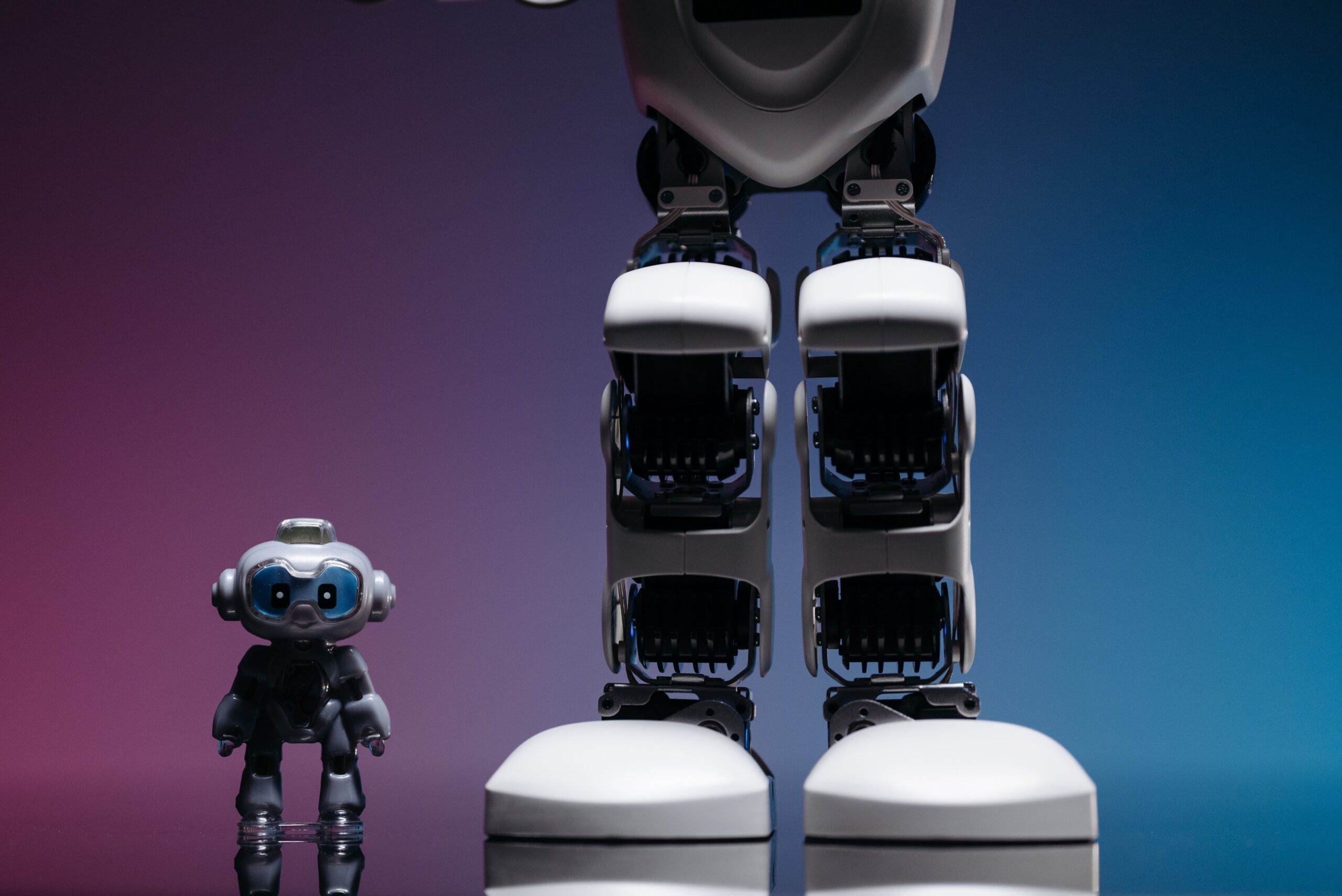
Lean enterprises are competing with their heavy-hitter counterparts by integrating automation platforms and generative tools.
Artificial intelligence is reshaping how enterprises work and grow by letting smaller teams deliver results at a speed once reserved for large corporations. Today, teams use automated platforms to manage many routine administrative tasks, analyze datasets, and run marketing tests and campaigns. However, adopting AI tools alone does not guarantee a small company a big competitive edge. True advantage only emerges when business leaders deliberately choose which operational tasks to automate while still employing human oversight for their most important tasks and decisions.
How to Automate the Health Tech Sector
Health technology platform ThePep.Report builds personalized DNA-to-peptide protocols using retrieval-augmented generation models. Outside of their main product development, they use specialized recording devices to log conference conversations and then send those transcripts to processing software for immediate analysis.
Scott McIntosh, the founder of ThePep.Report has opinions on AI’s usefulness.
“The ultimate goal of AI is not just efficiency; it is moving society from an age of information to an age of intelligence, where humans are freed from drudgery and can focus on truly meaningful work.”
LLMs in Human Resources and Marketing
Human resources and payroll services require careful precision, which can create hurdles for automated software. HR provider Warp uses automated systems across payroll, regulatory compliance, and onboarding while keeping human oversight centered on sensitive financial transactions. Meanwhile, their marketing department uses large language models (LLMs) to run editorial campaigns across multiple channels.
“Speed and quality are not at odds. AI accelerates the work, but human oversight is still non-negotiable, especially in payroll, where the tolerance for error is essentially zero,” Nicole Sievers, the Content Marketing Lead at the company, explains.
AI and Increased Code Generation
Software development teams have reported notable jumps in performance with machine-assisted coding systems. Enterprise automation from Ushur, for instance, has scaled its engineering department down from 150 developers to just 50 while quadrupling feature production. Their engineers write, test, and ship features on their own, bypassing multi-week update schedules.
“A task that previously required five to seven people and four weeks can now be completed by a single engineer,” Mayank Choubey, the Director of Product Innovation at Ushur, revealed. “That is not just an efficiency gain; it fundamentally changes how you think about building software.”
Intellectual Property Protection and Advanced Technology
Protecting proprietary knowledge remains as essential as ever as businesses integrate modern software solutions. Virtually Myself handles security by using an isolated digital “vault” that stores founder research and lets teams query material while protecting IP and identity.
“Most AI tools pull from the whole internet, but what makes you valuable is your specific IP: your lived experience, your frameworks. Virtually Myself keeps all of that private, in a vault that only you control,” Nina Christian, the co-founder, explains.
A Picture of Progress through AI
In the graphic design sector, startup Car Background AI can recreate vehicle photos with accurate lighting and reflections. The process lets them create quality images across large vehicle inventories, which can lead to higher engagement in the digital marketplace.
Tamas Magda, the company’s co-founder, explains, “As a small startup, our advantage is agility. We monitor academic papers, adopt new AI models quickly, and iterate faster than companies tied to outdated systems. That speed is our real competitive moat.”
Small Teams, Big Outputs
Integrating automation, when thoughtfully done across sectors such as engineering, human resources, and marketing, makes enterprises less reliant on more traditional high staff numbers. When small businesses utilize AI with a clear strategy and proper intent, the number of seats filled in an enterprise is no longer a deciding factor in how competitive that company may become. Rather, small teams can manage large outputs and challenge industry leaders.