
Image credit: Pexels
As artificial intelligence becomes more deeply integrated into workplace operations, project management platforms are evolving from passive tracking tools into active decision-making assistants.
For years, project management software has served as the operational backbone of organizations. Teams relied on dashboards, task lists, timelines, and status updates to coordinate work across departments. Yet as companies expand, workflow becomes increasingly complex. This is where leaders are beginning to question the efficiency of traditional platforms.
The challenge is that conventional project management tools often depend on constant manual input. Employees must update tasks, log progress, and organize information separately from the actual work itself. In fast-moving organizations, that process can quickly become disconnected from reality.
From Task Tracking to Work Intelligence
The latest wave of AI platforms is moving away from static project boards toward what many technology leaders describe as “work intelligence.” Instead of asking employees to document activity manually, these systems capture information from meetings, workflows, documents, project files, messages, and team interactions in real time.
AI systems are now interpreting meeting discussions, identifying workflow blockers, connecting related documents, and assessing operational risks before leaders request status reports.
This evolution is changing expectations on how organizations measure productivity and execution. Modern companies want platforms that understand relationships between projects, priorities, and outcomes.
Connecting Projects to Business Outcomes
Among the companies driving this transition are strategy execution platforms that align operational work with organizational goals. These systems are designed to help executives understand how daily activities contribute to broader business outcomes.
Platforms like Cascade Strategy are positioning themselves as alternatives to traditional project management software by emphasizing strategic alignment rather than isolated task completion.
Tom Wright of Cascade Strategy argued that many existing project management tools fail because they sit outside the actual workflow employees experience each day.
“Project management tools are like adding a layer of work rather than actually embedding in the work kind of like where and when it’s happening.”
He added that conventional systems often provide only a limited view into organizational activity.
“I think that the fundamental kind of challenge, suppose, with existing tools like project management tools, … they capture a very, very thin layer of what is actually happening.”
That disconnect, Wright said, can create frustration among employees who spend more time maintaining systems than benefiting from them.
“That actually feels like, you know, you’re serving the tool rather than the tool is kind of serving you.”
AI-Powered Leadership and Team Alignment
AI-driven workplace tools are expanding beyond operational workflows into leadership analysis and team alignment.
Some platforms are now designed to evaluate communication patterns, meeting behavior, leadership tendencies, and role compatibility. Rather than focusing solely on productivity metrics, these systems attempt to help organizations understand how teams function and where individuals perform most effectively.
Platforms such as Role Color Finder are part of that broader movement. Leadership assessment tools increasingly use AI to identify behavioral strengths, collaboration styles, and role fit within organizations.
The growing interest in these systems highlights how project management is evolving into a wider conversation about organizational intelligence.
Morphal uses AI agents to automate 60-70% of process-oriented knowledge work, allowing human teams to focus on higher-value tasks. Their “human-in-the-loop” model ensures accuracy by requiring human triggers and final approvals.
“Humans are still in control. Humans trigger every workflow that is run by AI agents. So there is nothing that happens from an AI agent on their own. Humans keep control of what’s happening. So nothing happens in AI until one person, which is normally the head of the department, triggers the AI workflow,” says Rodrigo Cardenete, co-founder of Morphal.
Content-Native Automation Changes Enterprise Workflows
Another major shift is occurring in enterprise workflow automation. AI-native platforms are increasingly capable of reading documents, extracting metadata, routing approvals, escalating risks, and coordinating tasks without requiring constant human intervention.
This approach allows enterprise teams to move away from simple project tracking toward intelligent orchestration. AI agents can determine whether documents require escalation, assess approval confidence levels, and dynamically route work based on operational context.
The emphasis is no longer on monitoring tasks individually, but on enabling systems to coordinate processes autonomously while keeping human decision-makers informed.
Roger Yarrow, co-founder and CEO of TrueLook, sees AI’s value as a creative tool that augments human judgment, rather than replaces it. Viewing automation this way is key to overcoming industry skepticism.
“Skepticism [of AI] is still valid if you think about it with a closed mind, if you think of it just as a tool that’s going to do things for me. Instead, it is art. So if you can just translate, it’s not a hammer, it’s a paintbrush. And then that’s where the skepticism is on the hammer side. But if you can really work with it, you can create amazing things and do incredible transformations,” says Yarrow.
Real-Time Visibility in Field Industries
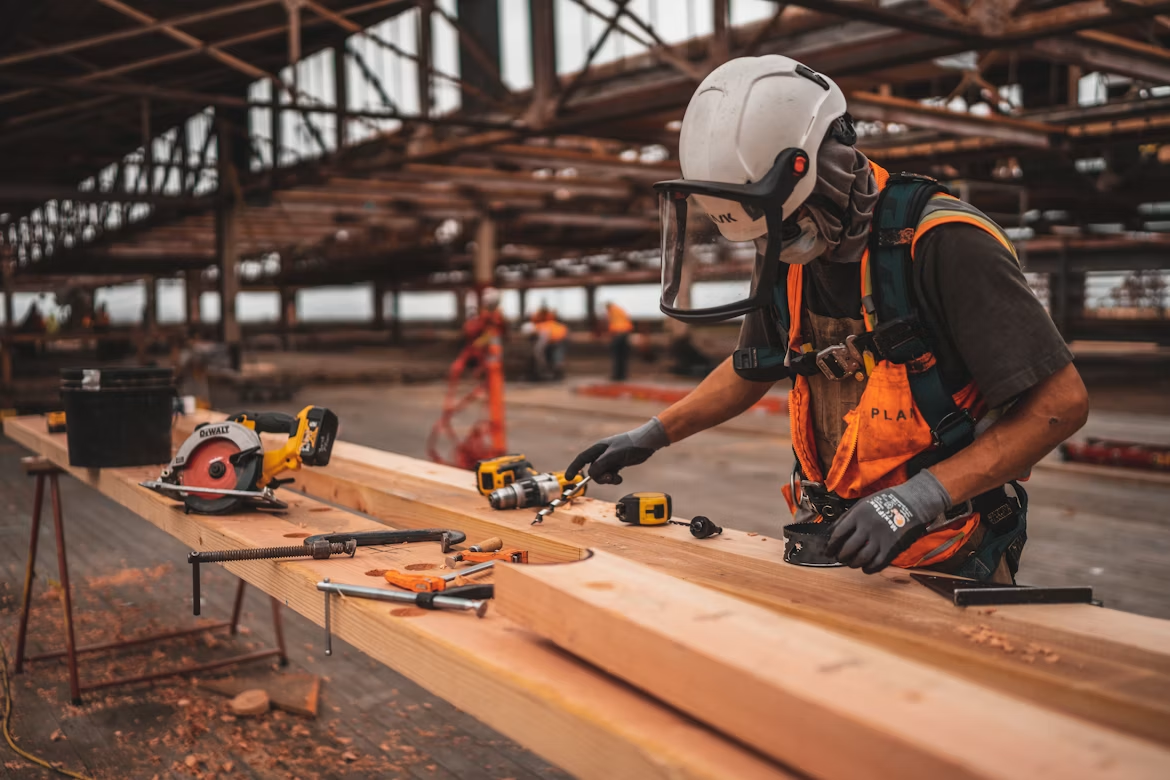
Industries such as construction are also seeing rapid adoption of AI-powered operational platforms. Visual documentation tools, AI search capabilities, remote access systems, and workflow integrations are helping companies reduce dependence on manual reporting. Teams can now verify progress through images, live documentation, and automated updates, rather than relying on written status reports.
These technologies are particularly valuable in environments where projects span multiple physical locations and require constant coordination between field teams and corporate leadership.
Why Human Oversight Still Matters
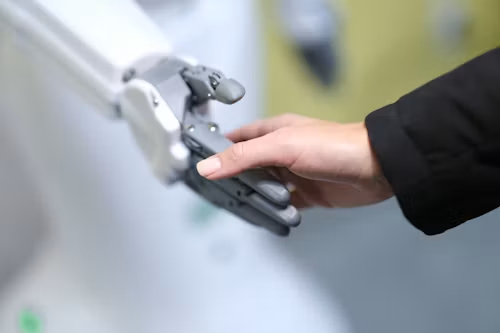
Despite rapid advances in automation, technology leaders continue to emphasize the role of managerial judgment.
Governance, accountability, escalation procedures, and organizational trust remain central to effective operations. While AI can reduce repetitive administrative work and surface insights more quickly, companies still require human oversight to evaluate context, resolve conflicts, and make strategic decisions.
The balance between automation and human judgment is becoming one of the defining conversations in enterprise technology adoption.
Nirmal Ganesh, Senior Director of Product Management at Box, understands the concerns of AI taking jobs. However, he emphasizes that automating the right tasks can have big benefits for efficiency.
“In reality, it’s not about losing a job. It’s about helping AI make your job more efficient, make your job better,” says Ganesh.
The Future of Project Management
The next generation of project management platforms is likely to look different from today’s task boards and spreadsheets. Instead of functioning as static tracking systems, AI-powered platforms are designed to understand organizational context, coordinate workflows, and support real-time decision-making.
For many technology leaders, the future of project management will not be about manually updating tasks. It will be about building intelligent systems that understand how work gets done and assist humans in executing it more efficiently.